Questions about Protests


Questions about Protests
by Susan Basko, esq

I was just looking at the Google Queries that led people to this blog today.  These include the following questions, which I will answer.  I am taking the google search queries exactly at they were written: 


how long do protesters go to jail 
Protesting is legal in the United States.  It is our right under the Constitution.  The vast majority of people that participate in protests do not get arrested. Some people do get arrested at protests, usually for such things as blocking traffic, trespassing, or property damage.  It is also possible to be arrested at a protest for no reason other than being targeted by the police.  In most cases, those who are arrested are let out after a few hours or within a day. Sometimes they are charged with a crime and sometimes they are not.  If they are charged with a crime, then they are usually given a date to go to Court.  If a person was arrested at a protest for something more serious, such as breaking windows or starting something on fire, then they will probably be held and should go before a judge within a couple of days to set bail.  If a person is arrested and has an outstanding warrant from something that happened before, they will usually have to be in jail until they can clear up that warrant.  That has been known to take weeks.  If you know you have an outstanding warrant, then you should probably avoid going to a protest or being arrested.

KEEP IN MIND that many people who are arrested at protests are doing so intentionally as a form of CIVIL DISOBEDIENCE.  They intentionally break the law because they want to be arrested as a form of protest. If you do not want to get arrested and if people start talking about "Civil Disobedience," then avoid participating with them since their goal is to be arrested.  Don't be swayed or coerced by what they say.  If you don't want to be arrested, do not participate in activities that are geared to get you arrested.  A lot of people leading such activities fail to plan for or take care of those they have caused to be arrested.

how long does it take to get a permit in nyc to have a protest
 I don't know, but in most cases, you do not need a permit to hold a protest.  If you keep the protest in a public space, such as a plaza, or on the public sidewalk, you don't need a permit.  Applying for a permit in other cities I do know about can take months.  That all makes no sense since the thing you are protesting about will most likely be over before a city gives you a permit.  If you are planning a really big protest tied to a future event, then it makes sense to apply for a permit.  International law says that cities are supposed to accommodate the rights to freedom of assembly and freedom of speech, even if this inconveniences others.

can fbi search a computer if not listed on search list
The FBI is supposed to have a search warrant before it can search a computer.  Ask to see a warrant and read it carefully.  As you note, the search warrant has a list of places to be searched and items to be seized. If the computer is not on the list, then it is not supposed to be searched or seized (taken).  If the FBI doesn't have a valid search warrant that lists the computer, then any evidence they find on the computer might be suppressed as being gotten without a lawful search warrant.

HOWEVER, if you give permission to the FBI or to any other police agency to search your computer or to search anything, then you are forfeiting your rights and protections.  Never give permission to allow any police or agency to search anything. If police or an agent ask you "Do you mind if we look?,"  the answer is, "Yes, I do mind.  No, I do not give my permission for any type of search."  I know of an instance where law enforcement agents asked to search and seize computers during a swat -- a false emergency call to the police.  If asked for permission, say no.

chicago protest permit
In Chicago, you do not need a permit to protest unless you are in locations where a permit is required to gather a large group, or if you plan to block the street.  Even then, international law standards say that if a protest is large, it should be allowed in the street.  See the article on this blog about Where You Can Protest in Chicago.   Getting a permit in Chicago is a lengthy process and should be reserved for times when you are planning well into the future.  If you are just holding a simple protest -- go out and do it.  If you want it to be legal, keep it to the public sidewalks and publicly-owned plazas.

do protesters have to have a permit to march on streets
To march on the sidewalk, you do not need a permit.  To march in the street, you do need a permit in most cities. HOWEVER, the international law standard says that the police should accommodate a large protest and let them march in the streets.  If a protest blocks traffic, often there will be arrests.  Something may be the "right" of a protest, but that does not mean protesters won't be arrested.  If there is a big group, sometimes police will follow the international law guidelines and accommodate the protest so it can be held on the street.  Not always, though, so you need to gauge what is happening and listen to instructions if you want to avoid being arrested.

do you need a permit to protest
 No,  Protest does not require a permit if you keep it on the sidewalks or in a publicly-owned plaza.

do you need permits to protest in california
No, see answers above.

find a place to protest
You can protest on a public sidewalk or in a publicly-owned plaza.  Look where others in your area have successfully run protests and use that same space.

how long do you sit in jail protesting
Most protesters do not get arrested.  Of the few that are arrested, most are released within a few hours.  A very few will be kept up to 2 days, if they are facing charges and need to go before a judge to set bail.   If a protester has an outstanding warrant for their arrest from something that happened before, they might be kept until the warrant is cleared up, which can take weeks.

how much does a protest permit cost
A protest permit should be free.  You don't need a permit if you keep your protest on a public sidewalk or in a publicly-owned plaza.  If you are running a big protest for a specific event and you do want to get a permit, there is usually no cost in most cities -- but a city might insist on such things as insurance, porta-potties, etc.  International standards state that a city should bear the cost of policing and should not require insurance. If your protest is just a rally or march held on short notice in public spaces and on public sidewalks, then you will be doing that without a permit.  Sometimes a big protest is also held without a permit.  If there are many people and they do not all fit on the sidewalk, sometimes it will be held in the street, even without a permit.

why are people being arrested for protesting
Protesting is legal, so the vast majority of protesters do not get arrested. Sometimes protesters do get arrested. Sometimes the arrests are targeted by police who are looking to harass the people they perceive as leaders.  Sometimes police act crazy at a protest and engage in what are almost random kidnappings of people. But that is pretty rare and more confined to cities where the police are poorly trained.  But it does happen, so it is good to be aware of.   AND. . .

Other than that, the main reasons protesters get arrested are:

  • Being in the street when they've been told by police to get out of the street.
  • Blocking traffic or blockading a roadway.
  • Sitting in traffic or in the street.
  • Writing on anything with spray paint or markers.
  • Carrying any fire-creating device such as fireworks or a road flare, or using one to start fire.
  • Causing any damage to property or people.
  • Climbing on any vehicle.  Rocking or tipping any vehicle.
  •  Harassing or menacing other people walking, in shops, in cars, etc.
  • Trespassing onto private property.
  • Blocking an entry, exit, elevator, public transportation, etc.
  • Not following police orders during the protest.
  • Possessing a bottle bomb, bat, gun, knife, etc.
  • Throwing anything.
  • Not leaving if the police have announced it is an UNLAWFUL ASSEMBLY. Once the police call this, then anyone that stays can be arrested.
  • Not leaving if police announce it is a RIOT.  Once the police call it a RIOT, then they can also announce that everyone there is "Under arrest."


Deray sued by Cop for Incitement: Far-Fetched

Deray McKesson
Deray sued by Cop for Incitement:  Far-Fetched
by Susan Basko, esq.


Tuesday, November 9, 2016.  Yesterday afternoon, a lawsuit was filed against Deray McKesson of the Black Lives Matter (BLM) movement by an unnamed police officer from Baton Rouge, Louisiana.  The police officer claims that the BLM activist, popularly known as Deray, incited violence during a protest in Baton Rouge.  The officer was injured by a man who threw a rock or piece of concrete at his face.  The officer does not claim that Deray played any part in the rock throwing, nor does he name any words spoken by Deray that allegedly would cause the other man to throw the stone.  Nor does he claim that Deray ever spoke with the man who threw the rock.  Rather, he claims that Deray was present at the protest, he is a BLM leader, and that he was speaking with others at the protest.  The officer claims that Deray was "ordering" others.  The officer also sued Black Lives Matter, which is not an organization, but a movement of people nationwide in protest of police killings of Black people.  You can read about the lawsuit against Deray in this article in the Daily Kos.  There is some sort of affiliation of BLM chapters, but Deray's group does not belong to it.  Rather, he is a founder of a group called Campaign Zero, which seeks to end police violence by collecting data and strategically affecting Use of Force policies and police union contracts.

Deray was arrested at the protest in Baton Rouge, as seen on video live streamed by both himself and his friends.  At the time, Deray was walking in a legal space along the side of a road. From the video, there was nothing discernable as being illegal in Deray's actions.  He was simply walking along in a protest with his friends, when he was set upon and dragged off.  Several days after the arrests, Baton Rouge announced it would not be charging about half of those arrested, including Deray.  Such arrests still severely chill rights by making people less likely to participate in protests, which is their legal right as forms of freedom of assembly and freedom of speech.

Deray and a group of others filed a federal class action lawsuit against the Baton Rouge saying the police violated the civil rights of the protesters by acted in a militarized and aggressive manner toward them.  You can read about this here in the Guardian.

This lawsuit by the Baton Rouge police officer is highly unusual in several ways:  First, if any incitement to violence had taken place, it would be a crime that could be prosecuted, and not usually handled as a private action tort, or lawsuit.  Second, it is very unusual for a police officer to sue someone as an unnamed John Doe.  Third, "incitement to violence" requires words that are an imminent call to violence, and in this case, no such words have been alleged.  It is not even alleged that Deray ever spoke to the man who threw the stone.  The known words of Deray that are heard on video have Deray stating that the protesters had been peaceful and the police had not been.  It is very far-fetched that such words could be considered incitement, aside from it being even more far-fetched that the man throwing the stone even heard the words.  Fourth, neither Deray nor his group called the protest.  It would be extremely unusual to try to hold Deray responsible for what happened at the protest.

In any protest group or other gathering, there can be people who either come to cause trouble or get caught up in the moment.  Each person is responsible for their own behavior.  Incitement involves an exhortation or urging to imminent violent action. There simply is no known evidence that any such thing happened at the Baton Rouge protest.

The lawsuit against Deray also claims he did not try to calm down the protesters.  However, from Deray's perspective, it was the police who were out of control, overly aggressive, militarized, and acting inappropriately toward peaceful protesters.  From the videos, it looks as if Deray was simply trying to keep himself and his closest friends out of harm's way.

What makes this lawsuit even more far-fetched is the nature of Deray himself.  For the past month or so, I have been blessed with being granted a coveted spot at seminars run by Deray at the University of Chicago Institute of Politics.  I've had the opportunity to hear and learn from Deray, to meet and listen to his closest associates in Campaign Zero and the Black Lives Matter movement.  There is no way on earth Deray incited anyone to violence.  I'd describe Deray as highly intelligent, well-spoken, calm, funny, slight nerdy,  friendly, busy, practical.  I could picture him participating in a spelling bee or a math contest, not in a gun battle.

When Deray was arrested, he seemed surprised, so much so that naysayers online claimed it was staged. Nope, he was just a goody two shoes walking along, shocked to be arrested and hauled off for no particular reason.  The wide-eyed "deer in the headlights" look in the pics of him being arrested is genuine.  Deray's response to the lawsuit against him has been that he hopes the Baton Rouge Police will return his bookbag.

Deray's associates from the BLM movement are strikingly brilliant and filled with hope and ideas.  One such is Sam Sinyangwe, who gathers and charts data on police department Use of Force policies and killings by police.  Another is Brittany Packnett, a graduate of the prestigious George Washington University in St. Louis, who trains educators as her full-time job and volunteers to help raise awareness for the Black Lives Matter movement.  Anyone who is hoping to find swaggering tough-talking throwbacks to the 1960 radical days will be surprised that the BLM movement is run by top-tier graduates of prestigious schools, with perfect diction, poise, grace, seemingly boundless natural energy, positive enthusiasm, and a strong dose of humor.  There is much good-natured laughter in our seminars.

Deray was formerly a 6th grade math teacher at a Baltimore public school with violence problems.  Just yesterday, Deray stated that he he disagreed with many people and thought there should be police in schools, or at least in schools with problems of violence.  But he does not think police should be handcuffing kids and taking them to the office, but rather than they should be on hand for incidents of violence.  This does not sound like a man who would incite someone to toss a rock at another human.

If the Baton Rouge police officer suing Deray is hoping to pose Deray as a tough talking bad guy, he's got quite a surprise coming.   It is too far-fetched.


How Cointelpro Works


How Cointelpro Works
by Susan Basko, Esq.

The other day, a true troll lawyer who is suing "half the people on the internet" posted a link to a cointelpro-created blog article that is supposed to cause people to think ill of me. The article, which is several years old, is a classic example of cointelpro.  In this age of the internet, cointelpro smear pieces have lasting power.

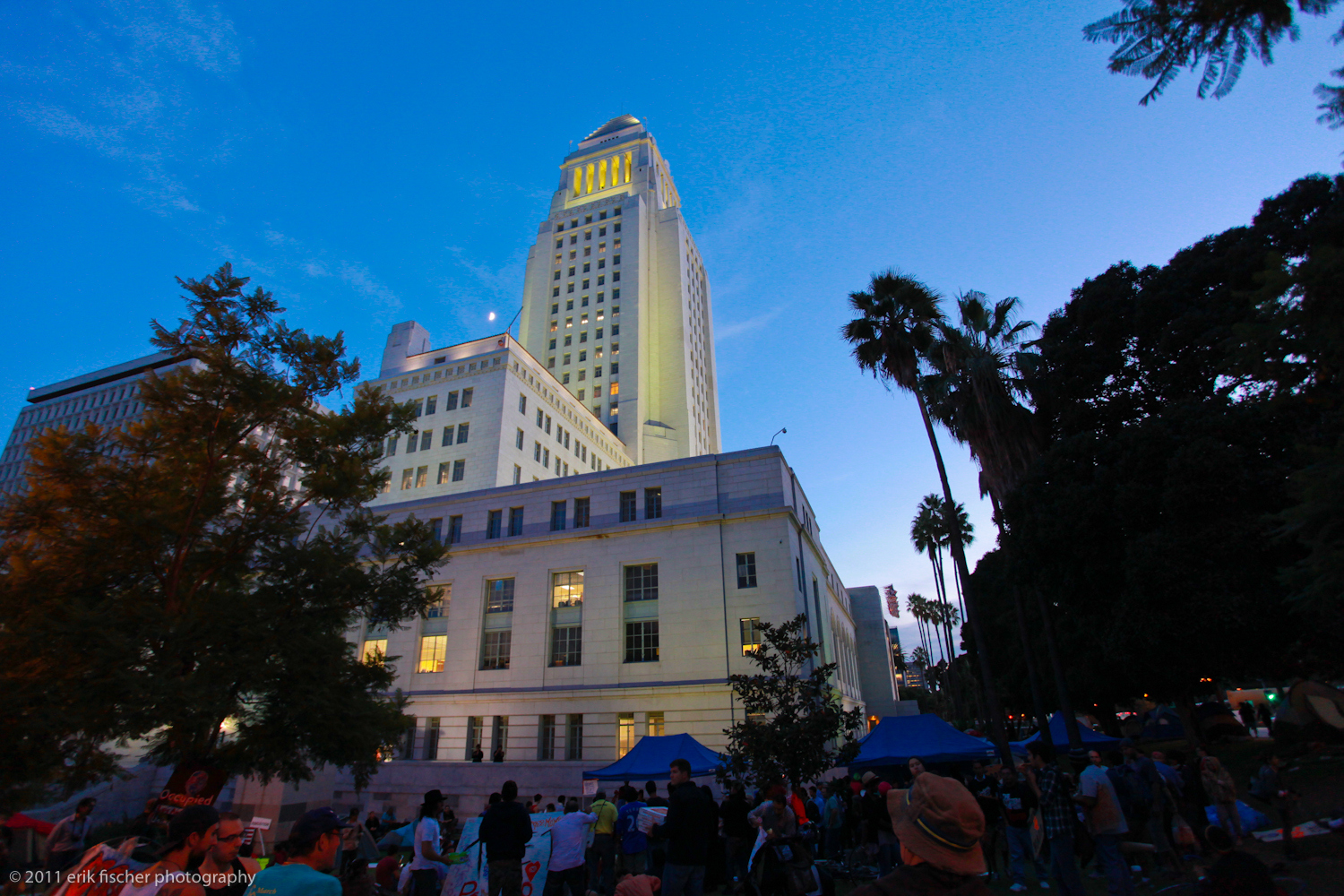
 The cointelpro smear piece against me emanates from early Occupy Los Angeles and keeps being revived by the cointelpro agents and their dupes. Before the OccupyLA camp started, there were planning meet-ups. Some of my family and friends were involved, and I gave some legal advice, such as to get porta-potties and that it is legal to sleep at night on the sidewalks in Los Angeles. After the OccupyLA camp got situated in the park by City Hall, it soon was infiltrated by paid agents.  Some of those agents formed a group that was supposedly more radical. This is a common technique to draw in the fringe elements and often, to entrap them. That supposed radical group was engaging in hardcore smear campaigns against many of the people who were doing the most positive work in running the camp, the media, and the finances.  I was quietly advising many of the people who were being smeared by this supposed radical group.  The supposed radical group had (and still has) a tumblr that is used to attack others, in typical cointelpro fashion.

Now watch how cointelpro works: One day, I was doing some trademark work and I noticed that 2 different people had applied for trademarks on the Occupy LA name.   One was an application by a person who was trying to "own" the OccupyLA name for himself as an organization and the other was trying to own the name for commercial products.   I thought it was important for the OccupyLA group to retain its own name and trademarks and not allow ownership of the name to be usurped by individuals looking to make a profit.

I emailed my findings about the trademark applications  to the editor of the OccupyLA website, for which I wrote many articles.  The editor asked me to put it in writing what could be done about the trademark applications and to list how much it would cost to deal with it.  I wrote him a simple explanation of the range of possibilities:  I could keep an eye on the situation and wait and see if the two trademark applications that were pending made any progress and report back to him as any changes took place, and this would cost nothing.  I could mount challenges to the two trademark applications by writing and filing letters and this would cost whatever the fee was for that, with my time donated.  The most aggressive tact would be to challenge the pending applications as well as to file trademark applications for the main real OccupyLA group, in the same categories that were in the pending applications.  The government filing fee on each category is $300.  So while I was willing to donate a good chunk of my time, this aggressive proposal would still cost a few thousand dollars.  Depending on the available budget, the group could choose the wait-and-see approach, the aggressive approach, or somewhere in between.

The editor of the OccupyLA site forwarded my emailed report to a few people, among them at least one of the cointelpro agents in the supposed radical group.  Soon, this person was creating a fantasy that I was greedy, that I was hoping to be paid "big money" that increased with each time he wrote the smear story.  First it was $1000, then $3000, then $10,000.  And the smears became outlandish.

When one is dealing with cointelpro agents, there is no dealing.  If you tell cointelpro agents that the thing they are saying is untrue, they simply create more lies.  I had been watching for  months as these same cointelpro agents worked hard to chase off the most productive people at OccupyLA. The victims of the cointelpro smear campaigns were concerned for their reputations, and rightly so.  I too, was concerned for my reputation. I knew the cointelpro agents who were working OccupyLA were fierce, highly trained at disinfo campaigns, at stopping productivity, and at causing rifts and divisions.

The same cointelpro tumblr and twitter account are still up and running and still maintained by obvious cointelpro agents. They still post links to their smear articles to try to harm the reputations of the people who helped productively with OccupyLA.

The reality is that I gave many hours to the people of OccupyLA and continue to give free legal advice and assistance to those who ask.  This happens behind the scenes.  The other reality is that while the camp was going, I was the one steering in many of the donations. Donations were money, food, water, tents, blankets, clothing.   I never asked anything of OccupyLA, but rather, offered to assist with the trademark situation and told what the costs would be.

The important thing to understand is that cointelpro agents weave their fantasies to scare off productive people, to create divisions, create confusion or fear, all to stop societal change from taking place.

Here is an interesting catch: Whenever I see this ludicrous cointelpro article claiming I somehow tried to make money by helping OccupyLA, I know that the person posting it is in touch with or working with the cointelpro agents.  Or the cointelpro agents see an ill-informed dupe and send them a link to their defamatory smear piece.   That's because any of the real people who actually helped with OccupyLA also had this same bunch write a smear piece on them.  Or many smear pieces.

Last I checked, new smear pieces were still being created by these same cointelpro operatives.   One of the agents often uses twitter to post a short, outlandish smear. I saw one where he posted saying a man I know was a rapist.  Just that.  A 140 character tweet with no further info, just labeling a very good, kind man a rapist.

There is little to nothing that can be done about cointelpro agents, other than to make people aware of what is going on, make them aware of the presence and work of the agents, and to gather the good, productive people into a safety net for each other.  Understanding the mechanisms of cointelpro and disinfo campaigns is important when trying to build a community or movement.  The powers that be very much want to control the people, the events, and the outcome.  Challenges to the status quo, challenges to have a better, happier, more fair society are frightening to those whose livelihood or luxury depend on quashing new ways of thinking and being.

So, when a person copies, quotes, or links to any of the cointelpro-created smear articles, this is a sure way to tell the person is either a cointelpro agent, a dupe, a fool, or just very naive and new to protest.


Barrett Brown's Plan to Overthrow the Government


Barrett Brown's Plan to Overthrow the Government
by Susan Basko

By now, you have probably heard that the U.S. government, on February 14, 2014, in the federal criminal case USA v Barrett Lancaster Brown, filed a sealed Opposition to Brown's Motion to Dismiss the first of three indictments against him and that in it, the U.S. alleged that Brown and Anonymous "secretly plotted the overthrow of the government."  At first glance, this sounds similar to people in the early 1960s afraid that young folks wearing bobby socks and dancing the Twist were plotting to overtake the nation with Communism.  At that time, those were serious concerns of quite a few people.  Today, there is serious concern that Barrett Brown may get prison time based on notions that seem just as far-fetched.

snippet of Docket in US v Barrett L Brown  
Why is the government filing sealed documents in a criminal case, which by the U.S. Constitution is supposed to be a process open to the public?  The docket, pictured in part above, shows that Brown's lawyers filed the Motion to Dismiss as Document 98.  Then there is a gap, with Documents 99 - 101 missing.  Those 3 documents are likely a motion by the government requesting to file an Opposition to Brown's Motion to Dismiss under seal, the Court Order giving the government the right to file that Opposition under seal, and the Opposition Reply itself.  In order to be able to file under seal, the government usually must state that the document contains information or allegations of crimes that are still under investigation.

Since the Opposition was filed under seal, we know of its contents only by the inferences that can be made and the quotes from it contained in Brown's Reply to the Government's Opposition, which can be read HERE.  Brown's Reply states that the government is alleging that Brown and Anonymous "secretly plotted the overthrow of the government." Since the document is filed under seal, this likely means the government is engaging in an active investigation into this alleged crime.  So, this is serious.

If you carefully read the law below, you will note that "overthrow of government" refers to that done by "force or violence," including by threats of violence against persons or property. If the government were able to prove that Brown or any member of Anonymous were advocating, publishing, or organizing to overthrow the government by force or violence, including by threats, then those who do so or who conspire to do so might be imprisoned for up to 20 years.  So, this allegation by the government is rather extreme, and not the ridiculous joke it seems at first glance.

The law that pertains to overthrow of government is
US TITLE 18  PART I  CHAPTER 115   § 2385 ADVOCATING OVERTHROW OF GOVERNMENT.   
Whoever knowingly or willfully advocates, abets, advises, or teaches the duty, necessity, desirability, or propriety of overthrowing or destroying the government of the United States or the government of any State, Territory, District or Possession thereof, or the government of any political subdivision therein, by force or violence, or by the assassination of any officer of any such government; or

Whoever, with intent to cause the overthrow or destruction of any such government, prints, publishes, edits, issues, circulates, sells, distributes, or publicly displays any written or printed matter advocating, advising, or teaching the duty, necessity, desirability, or propriety of overthrowing or destroying any government in the United States by force or violence, or attempts to do so; or

Whoever organizes or helps or attempts to organize any society, group, or assembly of persons who teach, advocate, or encourage the overthrow or destruction of any such government by force or violence; or becomes or is a member of, or affiliates with, any such society, group, or assembly of persons, knowing the purposes thereof—

Shall be fined under this title or imprisoned not more than twenty years, or both, and shall be ineligible for employment by the United States or any department or agency thereof, for the five years next following his conviction.

If two or more persons conspire to commit any offense named in this section, each shall be fined under this title or imprisoned not more than twenty years, or both, and shall be ineligible for employment by the United States or any department or agency thereof, for the five years next following his conviction.

As used in this section, the terms “organizes” and “organize”, with respect to any society, group, or assembly of persons, include the recruiting of new members, the forming of new units, and the regrouping or expansion of existing clubs, classes, and other units of such society, group, or assembly of persons.

The law prohibits the overthrow of government by "force or violence."  "Violence" is defined under Federal penal code as:
TITLE 18  PART I  CHAPTER 1  § 16 CRIME OF VIOLENCE DEFINED
The term “crime of violence” means—
(a) an offense that has as an element the use, attempted use, or threatened use of physical force against the person or property of another, or
(b) any other offense that is a felony and that, by its nature, involves a substantial risk that physical force against the person or property of another may be used in the course of committing the offense.  

Tweet in @BarrettBrownLOL timeline Sept 9 2012  
So, it is okay to advocate changing or overturning the government, just not by force or violence.  Now, let's take a look at the methods actually proposed by Barrett Brown.  Perusing Brown's Twitter timeline, this series of tweets (above) about the ICP is found.  The ICP is Insane Clown Posse.  In a move bordering on hilarious, the FBI recently declared the Insane Clown Posse to be a "gang." To be blunt, the ICP is a bunch of white trash fans of the ICP rap band.  They call themselves Juggaloes and paint their faces like clowns.  The females are called Juggalettes and dress like cheap whores. Sorry, there is no other adequate way to describe it. The Gathering of the Juggaloes is a yearly music fest, usually held at a very rural place in Southern Illinois, that involves drinking beer, sliding in mud, fighting, and listening to exceptionally crappy music.  If these folks go to one music fest a year, thank goodness it is the Gathering of their own kind.

Barrett Brown is clearly joking in these tweets.  The ICP members are no more capable of  "seizing Michigan" than they would be of using a fork properly.  These tweets are droll wit, portending an imaginary future when the ICP is a political force, rather than a musical farce.
Tweet in @BarrettBrownLOL timeline Sept 7, 2012 
Nearby on the Twitter timeline, there is this tweet, with hashtags that seem to be Brown calling #Anonymous to #revolution.  What is at the pastebin is shown below. It is a document obviously written by Barrett Brown, that he titles "Operation Pursuant."  It is an exhaustive listing of methods of communication and gathering, mostly via the internet.  This is a revolution of thought, to take place not in meeting halls, but on the internet.  NOWHERE DOES THE DOCUMENT EVEN HINT AT ANYTHING VIOLENT.  This is Brown's manifesto: that people should gather on the internet, discuss, research, and share their ideas and information.  If this is Brown's attempt to "overthrow the government," it is perfectly legal, totally Constitutional, perhaps even Jeffersonian.

Ukraine Protest Support

Ukraine Protest Support 
please watch and share


Human Rights Watch asks OSCE to send a Human Rights envoy to Ukraine immediately:


OSCE Guide to Peaceful Assembly:

Basic Venue Safety
for festivals, Concerts, Shows, Protests, Parties


Basic Venue Safety
for Festivals, Concerts, Shows, Protests, Parties, and More
by Susan Basko

See also: Counter-Protesters and Counter-Demonstrators

When you gather a large group of people for an event, your top most priority should be their safety.  Disasters happen very quickly and are almost always avoidable.  The conditions that cause a disaster are almost always the result of those running the event taking a shortcut, not thinking things through, being lazy, or being cheap.   By "disaster," we mean something that causes multiple deaths or injuries. In a venue disaster, the deaths will usually be from smoke/fire, trampling, or crushing.

The place where the event is being held is the venue.  The venue may be indoors or outdoors. Disasters happen at outdoor venues, too.  Different types of events have different purposes, but the safety factors on all of them are quite similar.   Here are some basics:

Capacity:  Every venue, indoors or out,  has a maximum legal capacity of how many people are to be allowed in.  Exceeding the capacity is extremely dangerous.  The capacity of an indoor venue may be stated as one number if standing and another number if seated.  If a venue is such that patrons are flowing in and out, then you must use counters and see how many are inside before letting more in.

At most venues, the legal capacity is posted on a sign on the wall.  If you make a habit of looking at these signs, you will see that most venues have a much lower legal capacity than you might expect.  The legal capacity is based on square feet, purpose, whether patrons will be standing or seated, and if seated, at chairs or at tables, number of exits, number of toilets, and other factors.  It is great for an event to draw a crowd, but if the crowd exceeds the capacity of the venue, it is dangerous.

Permits/ Inspections:  Almost every locale requires any venue to be inspected and licensed as a permanent venue or permitted as a special venue.  These permits and inspections go a  long way in providing for safety. Most locales will inspect the layout of the space, the exits, the smoke detectors and sprinklers, lighting, electricity, platforms and stages, structures, props and hangings, sanitation, and any food service.  Many locales have written laws, rules, or policies that spell these factors out in detail.  You should work with people who know the rules and follow them.  Buy the guidebooks and have your staff use them.

Layout:  The floor layout for an event should be done in advance to scale with a computer rendering.  It should be done according to the local laws.  By law,  there must be large amounts of space between two tables.  By law, there must be a very wide open space in front of and around any exit or pre-exit.  A pre-exit is the exit from a room to another space that is not the outdoors.  A venue may have 5 or  6 pre-exits from the event space to the outdoors.  Each pre-exit must be carefully planned and the space around it must be laid out properly.   At set-up time, the floor is measured and marked with chalk, so the layout matches the rendering.

Exits:  Disasters often happen because there are inadequate exits or exits have been blocked or locked. Even if a place has been inspected and licensed, if a manager or security guard gets it into their heads to lock exits, for their reasons of "safety," they can invalidate the license, invalidate the insurance, and endanger lives.  Never allow anyone to lock or block an exit.  If a venue has been licensed or permitted based on  a certain number of exits, if one of those exits is not functioning, at any time or for any reason, the entire venue becomes unsafe and usually also is invalidating its license and insurance and well as endangering lives.  If a venue needs to hire an extra set of people to stand by a door to make sure people do not sneak in, or whatever the concern is, then that is what must be done.  An exit cannot be locked or blocked for any reason.

Never allow any item to be placed in front of an exit. Items that some may be tempted to place in front of an exit include a ticket table, merchandise table or booth, autographs table, coat rack, etc.   Laws in most places require wide aisles or spaces between tables or between banks of chairs, and at least 10 feet of clearance in all directions at any exit.  Most places require lit "Exit" signs.  Venues should have emergency light systems that go on if the other lights fail, or in case of smoke or fire.

Exit Path:  The exit path should be designed so that each succeeding exit space is bigger and wider than the last.  This is equally important at an outdoor venue as indoors.  There was a terrible crushing disaster a few years ago at an outdoor festival where the exit gates led to a wide space that then led to a narrower tunnel.  Too many people got into the tunnel and people were crushed to death.  In an indoor venue, make sure the exit bath is not made narrower by lines to bathrooms, furniture, a snack bar, magazine racks, etc.  If the lights are out and the place is dark and filled with smoke, anyone walking or crawling to an exit should meet no obstacles.  Turn out the lights and try it.

Fire Hazards:  Disasters have been caused by such things as sound insulation that was not fireproof, use of pyrotechnics, decorations that were not flameproof, patrons using lighters to see, and other such things that, in hindsight, were easy to detect.  Absolutely any item that is used as a structure, decoration, prop, or furnishing in a venue should be flameproof or highly flame retardant.  Hold a lighter to it for 10 minutes and see if it burns.  Curtains, insulation, table cloths, upholstered chairs, decorations, etc. must all be flameproof.  Pyrotechnics or flame should never be used indoors and if outdoors, should only be run by licensed professionals in a space that has been inspected by a fire marshal.   Venues that bend these rules are the ones where a disaster is more likely.

Structures:  Collapse of stages or structures is sure to be disastrous.  Hire only a licensed, bonded, insured company and have the structures inspected by an outside source.  If a stage or structure appears to be top heavy, flimsy, off-balance, shaky, etc., it probably is.  Such situations may occur because those holding the event are trying to cut corners, save money, do things cheaply.  This is unacceptable.

Crushing: Crushing disasters happen when too many people get into one space at one time.  That's simple and logical, but preventing it is a fine art.  At outdoor venues with open lawn area, venues still often have the area just in front of the stage as a seating area, often with tickets. This is to prevent stage crush.

Even if an entire venue has seating, there can be crush if open seating, first-come, first in is used.  This is sometimes called "festival seating," a term that makes no sense, since the audience at a festival does not sit, but walks around.   This type of ticketing has been outlawed in some places.  It is much safer to assign tickets to seats.

Rowdy Patrons:  Patrons who are intoxicated or agitated can present a danger, obviously.  The usual techniques of screening at the entry and a good security force work well to prevent fights.  However, rowdy people are also the ones likely to cause a panic that leads to a rush to the exits.  A rush to an exit can happen quickly.  Security should be trained to isolate and contain any incident, so it does not result in a rush of people, with danger of a crush.  Making sure the venue is laid out properly and that it is not over capacity also helps avoid crush or rush.

Human Rights Defenders Risks


 Human Rights Defenders Risks
by Susan Basko

I was recently asked to assist in an international Consultation of Human Rights Defenders. In the consultation, we were making recommendations for the protection of people who are seen as Human Rights Defenders. I was asked to participate in the consultation because I actively defend the Human Rights of association, assembly, protest, speech, press, media, and technological use of media (such as live streaming, wifi, etc). The consultation was conducted by ODIHR (Office of Democratic Institutions and Human Rights) of OSCE (Organization for Security and Cooperation in Europe). There are 57 OSCE participating nations, and the U.S. is one of them. The Recommendations will be published in 2014. I have been invited to assist OSCE ODIHR with several major activities over the past couple years, based on my assistance to protest planners and media activists in the US. and worldwide. I distributed the consultation form to many others in the U.S.
.
Once the Recommendations have been compiled, they will reflect trends of risks that are faced by those who defend Human Rights. The OSCE has 57 participating States from Europe, Central Asia and North America: Albania, Andorra, Armenia, Austria, Azerbaijan, Belarus, Belgium, Bosnia and Herzegovina, Bulgaria, Canada, Croatia, Cyprus, Czech Republic, Denmark, Estonia, Finland, France, Georgia, Germany, Greece, Holy See, Hungary, Iceland, Ireland, Italy, Kazakhstan, Kyrgyzstan, Latvia, Liechtenstein, Lithuania, Luxembourg, Malta, Moldova, Monaco, Mongolia, Montenegro, Netherlands, Norway, Poland, Portugal, Romania, Russian Federation, San Marino, Serbia, Slovakia, Slovenia, Spain, Sweden, Switzerland, Tajikistan, fYR Macedonia, Turkey, Turkmenistan, Ukraine, United Kingdom, United States, and Uzbekistan.

BELOW I AM POSTING MY REPLIES TO THE QUESTIONS. The compiled Recommendations from the 57 nations will be available some time in 2014. I could have spent my entire reply on the shocking hate launched at me by disturbed sociopaths on twitter, but decided those sort of attacks by people with that type of social/ mental disorder are likely to be covered by others.

I feel greatly honored to be invited to assist in improving society within the 57 nations. My experiences with OSCE over the past two years have been meaningful and important. There is a great connectedness and commonality nation to nation between those of us protecting Human Rights. There is an energy of truth and goodness that can be felt when these people gather.

Question 1: Risks, threats and challenges
Which are the specific risks, threats and challenges you (or your organization) face as a result of your human rights work? 

Please provide a brief summary of the specific risks, threats and challenges (e.g. physical and verbal attacks and threats, legal persecution and harassment, restrictive NGO legislation, restrictions to freedom of expression, assembly and association etc.) you or your organization experiences and you consider should ideally be addressed in the OSCE/ODIHR Recommendation. If available, please also provide concrete examples of incidents or documented cases of abuses you/your organization faced. Please do not exceed the given word limit. For further details about specific incidents or cases you may want to include references to published documents or materials if available.

In your response, please also include if you or others belong to a group of human rights defenders that is at particular risk and whether you see specific gender-related challenges in relation to your work and the risks and obstacles you face.

Summary: Description of main risks, threats and challenges you/your organization face/s [MAXIMUM 700 WORDS] 
(e.g. physical and verbal attacks and threats; lack of effective remedies and impunity; legal persecution and harassment, criminalization, defamation campaigns; restrictive NGO legislation, obstacles in receipt of funding, burdensome administrative requirements and informal pressure; restrictions to freedom of expression, assembly and association; surveillance and undue interferences in private life; restrictions on freedom of movement and access to carry out human rights monitoring and reporting; lack of opportunity for participation in public affairs; impediments to access and communicate with international bodies and reprisals; etc.): 

Answering on behalf of self as lawyer and many organizations and individuals to whom I give assistance:

1) Activists are having Child pornography emailed to them in tricky ways, to set them up for legal troubles and prosecution. It is unknown who is doing this, probably individuals outside the government. Govt needs to be aware of this practice and beware of prosecuting. There is one known prosecution at this time of media activist in North Carolina.

2) The U.S. government is sending National Security Letters to activists and freezing assets. The NSLs state that the person or organization or someone else is under investigation, cooperation is demanded, and not even the letter can be revealed. I am not allowed to give details, but I am aware of several of these that have had the effect of stopping participation.

3) The U.S. government and its contractors are using Twitter personas to stalk, harass, belittle and demean others. This is obvious to regular twitter users and has a chilling effect.

4) U.S. government is prosecuting journalist Barrett Brown for posting a link online to materials that were hacked. Raises dangerous practice of prosecuting people for posting links and puts HUGE damper on press freedom and communication freedom. This is a giant issue and entire US and world should be in opposition to this prosecution. Brown was writing about US govt using private companies for surveillance and linked to online info about the companies. Indictment has about 12 counts for one link with potential of decades in prison.

Specific examples of incidents and documented abuses (please add references to published materials as may be required) [MAXIMUM 400 WORDS]: 

1) Activists being emailed child pornography to set them up for prosecution:
Happened to Luke Rudkowski, Dan Johnson, Stewart Rhodes, and about 12 other people that I am aware of as a lawyer. There is one known federal prosecution based on possession of a Child porn image, of a man who is a media activist. Case is federal and in Middle District of North Carolina, but I am not at liberty to write the man’s name yet, but it is a fed case on pacer.gov

Info and Video about Dan Johnson et al:
http://subliminalridge.blogspot.com/2013/07/child-porn-emailed-to-activists-to-try.html

Info on Luke Rudkowski:
http://subliminalridge.blogspot.com/2013/07/attempt-to-set-up-journalist-with.html

2) National Security Letters: By law, cannot give details. But I am aware:
http://subliminalridge.blogspot.com/2013/11/national-security-letters-help.html

3) Persona Mgmt: http://occupypeace.blogspot.com/2011/12/fake-profiles-used-for-spying.html

4) Barrett Brown prosecuted for posting a link:
http://subliminalridge.blogspot.com/2012/12/barrett-brown-charged-with-posting-link.htm
l

Question 2: Recommendations
Based on the protection gaps and needs identified above: What measures should OSCE participating States take in order to strengthen the protection of human rights defenders and guarantee an enabling environment conducive of their work, both domestically as well as across the region?

If relevant specify by which state actors (e.g. government, regional and local authorities, public officials) the measure(s) should be taken. Also include: (a) what specific mechanisms and procedures participating States should put in place domestically to guarantee the protection of human rights defenders (recommendations concerning domestic processes/mechanisms for implementation); and (b) what participating States should do to support the protection of human rights defenders and promote an enabling environment in third countries (recommendations concerning protection of human rights defenders abroad). 

Measures participating States should take in order to strengthen the protection of human rights defenders and guarantee an enabling environment conducive to their work, including recommendations concerning (a) domestic processes/mechanisms for implementation; and (b) protection of human rights defenders abroad. 
[MAXIMUM 1000 WORDS]

1) Governments and people and organizations should be made aware of this new practice of tricking people into downloading Child pornography images onto their computers in order to set them up for later legal troubles. Some of the images are being sent embedded in pdf files. Governments should set up a specific and obvious protocol for anyone to whom this has happened. Awareness, education, training.

2) The U.S. practice of sending National Security Letters in what appears to be a misuse of their purpose should be addressed. The NSLs are supposed to be used for important anti-terrorism purposes and are now being used to thwart protesters, media, etc. Awareness, education, training, legal challenges.

3) Practice of using social media for COINTELPRO and harassment of activists should be forbidden.

4) Governments should be barred from prosecuting the use of links/ hyperlinks by anyone online, including activists, journalists, independent media, researchers, or ANYONE. Links should not be treated as a wrongdoing or crime in any way.

David Coombs speaks re Pvt Manning - CA and WA


Public presentations by attorney David Coombs

coombsDavid Coombs, attorney for American prisoner of conscience US Army Pvt. Chelsea (formerly Bradley) Manning, will speak at three upcoming West Coast events hosted by the Private Manning Support Network. Mr. Coombs continues to represent the heroic WikiLeaks whistle-blower recently sentenced to 35-years in military prison.

Sunday, Dec. 8 at 7:00pm -- Los Angeles CA
The Church in Ocean Park, 235 Hill Street, Santa Monica CA 90405 - View flyer (pdf)

Monday, Dec. 9 at 6:30pm -- Oakland CA
Humanist Hall, 390 27th Street, Oakland CA 94612 - View flyer (pdf)

Wednesday, Dec. 11 at 7:00pm -- Seattle WA
University Temple United Methodist Church (Fireplace Room), 1415 NE 43rd St., Seattle WA 98105 - View flyer (pdf)

Events will include Q&A with Mr. Coombs, and a fund pitch by the Support Network to benefit Pvt. Manning's ongoing defense efforts, including pending legal appeals.
Events are presented by the Private Manning Support Network and Courage to Resist, with the help of Veterans for Peace, CODEPINK, Bay Area Military Law Panel, War Resisters League-West, Project Censored and the Media Freedom Foundation, SF Women in Black, World Can't Wait-SF Bay, OccupySF Action Council & Environmental Justice Working Group, OccupyForum, SF LGBT Pride Celebration Committee, Queer Strike, National Lawyers Guild-SF, and the Civilian-Soldier Alliance, MLK Coalition of Greater Los Angeles, Interfaith Communities United for Justice and Peace, Progressive Democrats of Santa Monica Mountains, March Forward, The ANSWER Coalition, Common Good Café, G.I. Voice / Coffee Strong, Peace Action Group of Plymouth Church UCC, Fellowship of Reconciliation-Seattle Chapter

$5-$10 donation requested at the door to cover event expenses. Wheelchair accessible. For more info, contact: Courage to Resist, 510-488-3559.

Help us continue to cover 100%
of Pvt. Manning's legal fees! Donate today.

National Security Letters: Help!


National Security Letters: Help!
by Susan Basko, esq.

Someone delivers a document of many pages to your home or office.  It does not look like anything you've ever seen before.  It says you or someone else is under investigation by some Department of the U.S. government and that you must cooperate.  It also says that you are ordered not to tell anyone about the letter or its contents.  You are alarmed and afraid, likely terrified.  Congratulations, the government has just treated you to a National Security Letter.  Here's a few things to know:

1) You can always show the letter to a lawyer.  The letter says you cannot disclose it to anyone, but that does not include that you cannot show it to a lawyer.   In fact, you should show it to a lawyer so they can help you understand what it is and what it means. The lawyer is also under the gag or nondisclosure order and cannot reveal the letter to the press or public.  It is good to have someone else know about the letter, and legally, you cannot tell anyone, not even  your spouse, that you received the letter, or anything about its contents.  So, show it to a lawyer.   

2) National Security Letters include a gag order, also known as a nondisclosure order.  The recipient is  supposed to tell no one about the letter or about what is being investigated.  They are not even supposed to tell that they got a Letter.  The National Security Letter may go into rather extreme detail, for many pages, listing off what it means by "don't tell anyone."   

3) A National Security Letter may be issued to a person or to a company.  The most likely sort of companies are those that deal in internet communications or finances.  Larger companies are more likely to have a lawyer on staff and to be familiar with the Letters.  Individuals or small companies that receive a National Security Letter are more likely to be baffled and frightened by the letters.  

4) A Judge in the Federal 9th Circuit (California, Washington, Idaho, Montana, Alaska, Nevada, Arizona) has ruled the gag orders unconstitutional, but has given the government time to gets its act together.  We'll see what happens.  As of now, recipients of a National Security Letter must comply with the gag order. 

Update September 2019:  The Constitutionality of the gag orders contained in National Security Letters has been the subject of back-and-forth litigation, as described in this handy Wikipedia article: https://en.wikipedia.org/wiki/National_security_letter    If you want to know whether a particular gag order is Constitutional at a given time, you would do best to do solid legal research to know the status at that time.

5) National Security Letters can be used by many federal government agencies.  In some instances, the main purpose in using a letter seems to be the gag order, rather than the investigatory portion. In other words, the letters appear to be used to shut people up.   Sometimes, this may be a valid purpose.  It helps, in assessing a letter, to judge whether the purpose appears to be more investigatory or more to keep the person from going to the media or to the public about a particular topic.

6)  A National Security Letter is supposedly issued for purposes of investigating terrorism or topics of concern to national security.  "National security" has become a broadly-used term that can mean almost anything involving the public or the government.  The governmental agencies are now issuing a huge number of National Security Letters.  That's a lot of intrusion into peoples' lives with no judicial oversight. 

7) If a National Security Letter requires its recipient to hand over information, that information is supposed to be non-content.  For example, if the letter is demanding email information, it is only supposed to be asking for who was contacted and when, not the contents of the emails.  Content-based materials are supposed to require a subpoena or warrant.

8) To send a National Security Letter, the government agency does not need probable cause or to go before a Judge, as is the case with a subpoena or warrant. This makes National Security Letters much more of a fishing expedition and opens them wide for abusive use.  The letters are seen as stepping stones to creating probable cause.   

9) National Security Letters contain a gag order that may be the main purpose of the letter.  If you worked for a government agency and were investigating something sensitive, and if you had an easy tool where you could order everyone involved to keep quiet, would you use it?   Likely so.

10) Tens of thousands of National Security Letters have been issued each year since they were instituted. The Letters are considered by many to be abuses of Constitutional rights.

11) A National Security Letter has 4 main parts.  First, it will tell which agency is investigating.  Many U.S. agencies have been given authority to send National Security Letters. Second, the Letter will tell who or what is being investigated. It may be the recipient, in which case the main purpose is likely to gag the person from speaking privately, publicly, or to the media about the topic or about the letter.  Or the letter may state that someone else is under investigation and may demand that the recipient hand over the requested information about that person, company, or organization.   Third, the letter will state what materials, if any, must be handed over.  Fourth, there will be a detailed gag or nondisclosure order.  If this is highly detailed, then the recipient may assume the main purpose of the letter is to force the recipient to keep quiet because an investigation is ongoing.  

12) A National Security Letter has the force of law.  For example, if the recipient talks to people or to the media about the letter, the recipient can be charged with a crime.  Likewise, if the recipient fails to comply with the demand for information, the recipient might be jailed.  This is very important to know.   

13 ) If you plan to violate the demands of the Letter, discuss first with a lawyer.  Several business owners have closed down their services rather than compromise the future privacy of their clients.   One such business owner is Ladar Levinson of Lavabit, an encrypted email service.  It is believed that Lavabit received either a National Security Letter or a secret subpoena.  Rather than comply, Mr. Levinson closed the service.  He was immediately threatened with jail, but it is dubious the government could force him to keep running his business so they could use it to spy on people.   You can read Mr. Levinson's letter about this HERE, or below:

My Fellow Users,
I have been forced to make a difficult decision: to become complicit in crimes against the American people or walk away from nearly ten years of hard work by shutting down Lavabit. After significant soul searching, I have decided to suspend operations. I wish that I could legally share with you the events that led to my decision. I cannot. I feel you deserve to know what’s going on--the first amendment is supposed to guarantee me the freedom to speak out in situations like this. Unfortunately, Congress has passed laws that say otherwise. As things currently stand, I cannot share my experiences over the last six weeks, even though I have twice made the appropriate requests.
What’s going to happen now? We’ve already started preparing the paperwork needed to continue to fight for the Constitution in the Fourth Circuit Court of Appeals. A favorable decision would allow me resurrect Lavabit as an American company.
This experience has taught me one very important lesson: without congressional action or a strong judicial precedent, I would _strongly_ recommend against anyone trusting their private data to a company with physical ties to the United States.
Sincerely,
Ladar Levison
Owner and Operator, Lavabit LLC
Defending the constitution is expensive! Help us by donating to the Lavabit Legal Defense Fund here.

How to Plan a Million Mask March

How to Plan a Million Mask March 
in 10 Easy Steps
by Susan Basko

Maybe you've heard about the Million Mask March scheduled for November 5th.  This is a world-wide peaceful march. Maybe you want to plan a march for your own city or town.  Here is how.

Here is some credible information about MMM:
The official website with local events: http://millionmaskmarch.wordpress.com/
The official FB event invite: https://www.facebook.com/events/505027169551591/
The official MMM Twitter acct: www.twitter.com/MillionMaskMarc 

 NOTE:  Do not get involved in groups other than those listed at the links above.  There are some strange groups forming from questionable sources.  

HOW TO PLAN A MILLION MASK MARCH in 10 Easy Steps:

I) First check to see if there is a march already planned for your location. If so, join in with that group. The list is here:  http://millionmaskmarch.wordpress.com/

II) If you need to plan your own march, it is too late in almost any city to get a permit. Therefore, to run a legal protest, you will need to hold it in a plaza or on the public sidewalk.  How to do this:

1) Choose a location that is a publicly-owned plaza such as by a City Hall, government building, etc. or a place on a public sidewalk.   If possible, get a local lawyer to help you with your plans.

2) The date is November 5, 2013.  Choose a 2-hour time slot.  Most likely is a 2-hour slot between the hours of noon and 8 pm.   That is a Tuesday.  For example, 2pm - 4pm is a great time slot.  But if you want students and workers to be able to attend, then 5-7pm or 6-8pm might be better.  Plan according to what works for your people.  The time slot is start to finish and includes gathering, running your protest, speakers, music and dancing, ending, and clean-up.  Plan and write your schedule and get helpers to keep it on time.

3) Create a facebook page for your event. Invite people using the Facebook invite system. Invite others.

4) Make a twitter account for your event.  Post your updates.

5) Put your march on the list: http://millionmaskmarch.wordpress.com/

6) Send out press releases: http://millionmaskmarchmap.wix.com/info#!pressrelease/c1tsl

7) Check your state and municipal statutes to see if it is illegal to wear masks in public.  If it is, print up masks, back them with cardboard or foam core board, and tape them to a flat stick, so you are holding them, not wearing them.  MASK TO PRINT: http://www.guyfawkesmask.org/ 

8) Plan what you are going to do at the protest.  Dancing, music, a speaker, drums, etc. are all good.  It is nice to have a live streamer, live tweeters, photographers, videos, etc.

9) The theme is freedom of internet and freedom from surveillance.

10) Run your protest.  Afterwards, clean up.  Pick up any papers or fliers that were dropped on the ground.  Leave the space cleaner and neater than you found it.

Raided by the FBI: What to Do


Raided by the FBI: What to Do
by Sue Basko, esq. 

This is a guide for activists who have been or might soon be raided by the FBI.  This applies to online and IRL (in real life) activists.  After a recent raid of a client, I spoke with a lawyer for the FBI.  She was perturbed that I used the word "raid," rather than her preferred term, "execution of a lawful search warrant."  The legality of such searches is always in question.  And, when a person's home is stormed by FBI agents with guns, it is popularly referred to as a raid.

This guide does not apply to you if the FBI is raiding you mainly for stashes of guns, bomb-making supplies, chemical agents or other weapons, illegal porn or obscenity, drugs, or because you have bodies hidden in your crawl space.  Okay?  You're not an activist.

This guide also does not apply if the FBI raid is on a business.  For helpful hints on how to prepare and deal with a business raid, see this GUIDE by the law firm of Kirkland and Ellis.  Some of the ideas in that guide, such as videoing the search,  sound difficult to pull off.  However, the guide is likely to be helpful overall and it is well worth reading now and implementing the advance preparations.

WHY THE FBI RAIDS ACTIVISTS:  The FBI ostensibly raids the homes of activists because they believe that by searching the homes, they will find evidence of a crime. In fact, it appears that the FBI conducts raids on the homes of activists to rein them in, warn them, threaten them with what could happen, to cause them trouble in their lives.  Raiding the home of an activist has a chilling effect against that activist, their group,  and may scare off other participants from exercising their First Amendment rights.

The legally stated purpose is that an FBI agent believes evidence of a crime will be found in the house.   That crime does not have to be one committed by you for your home to become subject to a search warrant.  The alleged crime may be one committed or planned by others in your group. That's why it's real important to watch out who you let into your activist circles and to exclude those advocating violence, etc.

Today's buzzwords that help back up "probable cause" to raid an activist include: anarchist, black bloc, Anonymous, hacker.  Back in the 1950s, it was Communists. In the 1960s and early 1970s, it was anti-war, SDS, Yippie.  In the later 1970s and 1980s, the focus was on cults and communes. In the 1990s, the fear was of protesters against animal and ecological abuse.  The 2000s brought fear of alleged terrorists.  Now, it's Black Bloc with their bandannas and Anonymous with their Guy Fawkes masks.

Be careful not to portray yourself or allow others to portray you in ways that do not reflect reality.  For example, an online news site wrote of one of my clients, "Another Anonymous Hacker Raided by FBI." I pointed out that he was not a "hacker." Then, they called him an "Anonymous Leader."  Again, I pointed out -- he was not a leader, and Anonymous has no leaders.  Another irresponsible website called one of my clients "a mind control occultist."  He had nothing to do with mind control or the occult.  And on and on.  If the website or writer is not malicious, they will make the correction and remove the offending material.

SIGNS YOU'LL BE RAIDED:

1) Harassment. Before the home of an activist is raided, the FBI will almost always make contact with that person.  This is in the FBI protocol handbook.   This may happen in the form of a contractor.  Usually, there will be someone in person or online who is harassing, following, being too nosy.  Or there may be several people.  If you are an online activist or have an online presence, there are likely to be so-called "trolls" or abusers bothering you.  Some activists, before and after being raided, have been  harassed, impersonated, lied about, etc., by strangers or acquaintances online.  Many of these harassers may be sock puppet personas.  The activist may "know" the persona, but not know in actuality who is behind it.  The correlation between being abused online and being raided is very strong, and it can be most helpful to take action to block the abusers.

2) Visit from an agent.  An FBI agent or two may come to your door to talk to you.  This may happen months before you are raided.  If they show up at your door, you are on their radar.  Anything you tell them can and will be used against you.  It is illegal to lie to an FBI agent, so you are much better off declining to speak than rattling off a mistruth.  "I don't know," is a lie if you do know.  If there is a situation where your telling what you know is likely to save lives or keep people safe, then there is good reason for you to share what you know.  Otherwise, the usual legal advice is to say you cannot talk, but ask for a business card.  Then you can speak with a lawyer and decide what to do.

3)  Someone casing your place.  Before the FBI gets a warrant for a raid, they send an agent to the building to get very exact directions and descriptions on how your place can be found.  They take photos of the building exterior, and hallways and doorways. If you are in an apartment, they may get a floor layout from the management.  These items end out attached as part of the search warrant.  Several people who have been raided  noticed this reconnaissance mission about 1 - 2 weeks before they were raided.  There was someone who did not belong. The person will go all the way to door and past it, to see what is beyond.  Several  people who have been raided have told me they saw such a person at their home or apartment building, and thought it odd.  It can be a warning sign that the warrant is being prepared and a raid is imminent.

4) On the day of the raid: WHEN:  Most federal search warrants are required to be executed between 6 a.m. and 10 p.m.  Most raids take place bright and early.  A search warrant can be executed while no one is home, and the door will be broken into.  On homes, that is rare, though I have heard of it happening on offices of activist groups.  If the FBI claims that you present a special risk, they can ask the Judge to allow the raid to take place at any time.  That's when they do a raid at night using night vision goggles, etc.  This is more likely if there is strong reason to think there are weapons likely to be used by those inside.

Local police are also more likely to conduct a raid at night, use flashbangs, hold those inside handcuffed and at gunpoint, etc.  Local police units conducting such raids tend to be sloppy, illegal, and highly dangerous.  The FBI will usually follow the FBI rules, which require the raid to be conducted between 6 a.m. and 10 p.m., and using force only if needed.

Several people have told me that the first sign they knew they were being raided was they heard unusual sounds.  These may be the sounds of many vehicles arriving, agents surrounding the residence, a walky-talky radio, voices heard outside windows that are in private locations, the sound of things being moved outside, such as patio furniture being moved, nearby dogs barking, etc.

Where force is used, the people may hear flashbangs, which are percussive fireworks, loud bangs that sound like very loud gunshots or a small explosion.  I guess the flashbangs are supposed to wake up the occupants and let them know they are being raided.  After flashbangs are used, the raiders then shout out "FBI!" or "Police!"  This generally scares the shit out of the people inside, and sets the tone for a very aggressive, unpleasant experience for all.  It is illegal for the FBI to use force unless a Judge has given permission in a warrant or if circumstances truly require it, which they rarely do.

5) On the day of the raid: HOW: Often, an agent will go to the front door of a residence.  When the person answers, the agent will announce he or she has a warrant.  They are supposed to show the warrant and give a copy.  Then the raid team will enter the residence.

6) On the day of the raid: WHO: In most raids that I know of lately, there have been 12 or more agents entering the home, and guns have been drawn.  The people participating in the raid may be a combination of FBI, NSA, local police, US Marshals, Secret Service, DHS, etc., depending on the location and situation.

7) THE WARRANT: Affidavit.  To get a search warrant, an FBI agent must write up an affidavit, which is a document that has numbered statements of alleged fact on it, and it is signed.  The affidavit must tell WHAT crime the agent believes has been committed and WHY he thinks there is evidence to be found at your house, and WHAT evidence he thinks is at your house.   The FBI agent then brings the affidavit to a magistrate judge, who decides whether or not to issue a search warrant.  I am told that if a magistrate judge wishes to keep his job, he approves all search warrant applications brought to him by the FBI.

In theory, the person named in the search warrant may be able to get a copy of the affidavit. This can be useful as evidence to challenge whether there was probable cause to conduct the search. In reality, most federal cases against activists are kept sealed and the documents are not revealed.  Many such searches do not turn into indictments and are never unsealed.  Thus, it usually remains a mystery what probable cause, if any, was used to get a search warrant on the home of an activist.

A search warrant is usually against a specific location.  That might be a house, an apartment, an office,  a storage locker, etc. I have also seen search warrants against a specific computer server or against a server cabinet.  The search warrant will specify if it is looking for items belonging to or under control of a certain named person.

WHY IT IS SO IMPORTANT TO AVOID "TROLLS" ONLINE: Many of the "trolls" online are actually people working as contractors/ informants.  It is very likely their (mis)information is used as a basis for probable cause to get a search warrant. "Trolls" are known to lie, fabricate entire events, circumstances, and connections, impersonate, fabricate responses, set people up to respond or participate in their own self-defense, create false documents, send false emails, and on and on.

This is why it is so important for activists to shun "trolls" or those with "trollish" behavior.  It should be assumed that any person engaging in such behavior has a paycheck coming for it.  If not, then they would stop such behavior upon having it pointed out to them that it is socially unacceptable.

From what I have seen in recent case after case is that online "trolls" harass and stalk the activist target before and after a raid.  In the case of Barrett Brown, "trolls" were even present in the chat room while he was raided and arrested.  The correlation between an activist being harassed by "trolls" and being raided seems very high, and it seems the higher the intensity of troll activity aimed at a person, the higher the likelihood they are to be raided.

8) THE WARRANT: What's in it.  The search warrant lists what places may be searched and what may be taken.  You should ask upfront for a copy of the warrant and read it before allowing the agents into your home.  Of course, it is hard to have the presence of mind to do such a thing when you are confronted by people with guns.  If you can do so, calmly take your time and read the warrant.  This could easily take 20 minutes or more, as there are likely to be 4 - 8 pages.  It is a good idea to read it.

NEVER GIVE PERMISSION for any area to be searched if it is not listed on the warrant and never give permission for anything to be taken if it is not listed. NEVER sign anything agreeing to any such actions.  For example, a warrant may be for items under the control of the person named in the warrant. If the residence is shared, permission should never be granted to search the rooms or seize items not under control of the person named in the warrant.  This is especially crucial in roommate or shared housing situations or in family situations where there are older or adult children.  ALSO, as to planning, if you are in a shared housing situation, it is a good idea to have a house rule that no one is allowed to keep their personal items in shared common spaces.

It can also be extremely dangerous to share a computer with anyone.  And if you have wifi, have each person have their own password.  Never leave wifi unprotected without a password.  It is a good idea to password protect a computer if you are leaving it alone. I had a client years ago, a university student,  whose landlord was entering the apartment while the student was at school. The landlord would use the student's computer to download obscene materials.  Try to be sure no one else has access to your computer(s), because you can be blamed for everything that takes place on your computer.

10) WHAT IS LIKELY TO BE TAKEN IN A RAID: When searching the home of an activist, the items that are most likely to be taken are:
  • Computers of any kind or size, hard drives, disks, data sticks, and any other data storage device. 
  • Cell phones.
  • Notebooks and papers.
  • Photographs. 
  • Masks, banners, pamphlets, fliers, bandannas.   
 Other Items:  If any other items are in the residence and are illegal but were not listed on the warrant, a second warrant may be issued.  For example, if there are illegal weapons of any kind or illegal drugs, even a pot plant,  the agents may hang around for a long time while one goes and gets a second warrant to take those items.

11) SEARCH: What they do: Many agents with guns will enter your home.  They may handcuff you or the other occupants.  They may force you to stay in a certain location.  They may say you are free to go, but most likely, you want to be there to have some idea of what they are doing to your stuff.  There will be one or more agents who will work on your computer, possibly downloading things or checking things.  They will later pack up your computers and take them.  The other agents will tear your house apart, moving furniture and dismantling things.  They will load things into bags and carry them out.  They will leave your home in an absolute, ransacked mess.  They will give you a receipt for the items they took.   You may lose your data, your records, precious photos, etc.  They will take your computers, phones, papers, etc.  

12) TRUST.  It bears mentioning that once your home is searched, you will never again trust the government or law enforcement.  If you are an activist, the same applies to your relatives, neighbors, friends, your circle of activists, and others who hear of the situation.  I estimate that for every FBI raid on the home of an activist, trust is decreased in probably over a million people,  in varying amounts, and for a time period probably extending 50 years.  The ripple effect seems to be very wide and very long-lasting.  These kind of raids harm the fabric of society and erode any confidence in the integrity of law enforcement.  It is very easy to view law enforcement officers as thugs when they show up at the homes of citizens and take the computers they use for their work, the phones they use to talk with family and friends, years of personal photos, and personal journals.  At this time, such raids have become widespread.  We are in a dire time in U.S. history.  Please pay attention.


13) SEARCH WARRANT VS ARREST WARRANT: A search warrant gives the FBI the right to search the place and seize the items listed in the warrant.  An arrest warrant gives them the right to seize and take a person.   Once an activist has had a search warrant against their home, they are usually afraid that an arrest warrant will follow.  By the apparent numbers, this rarely happens.  Most of the searches appear to be "fishing expeditions" or based on false or trumped up "probable cause."  (Hence, see the notes herein warning about "trolls.")

After a raid, it may be in your best interest to get off social media, or if you stay on, at least remove contact by trolls or problematic people.  It may also be in your best interest to let your lawyer handle certain contacts, such as with media, people with questions or concerns that seem nosy or inappropriate, etc.


WHAT TO DO and DON'T DO DURING A RAID:  
  1. DON'T answer questions and don't offer information. 
  2. DON'T interfere.  
  3. DO Make it known if you have medical conditions that need to be tended to. 
  4. DO get a copy of the warrant and read it before you let them in. 
  5. DO get a copy of the receipt. 
  6. DO try to call a lawyer.  
  7. DO take videos or photos of the agents, etc.  You are legally allowed to film law enforcement officers while they are working, so if you can, then do so.  It is likely to cause a ruckus, so be aware if you are going to try it. 
The Right to Remain Silent only works for those who keep their mouth shut.  If you start blabbing, trying to explain, offering information, trying to assure the officers that you have done nothing, answering questions, etc., you are giving up your right to remain silent and everything you say can and will be used against you.  Can and will be.

WHAT TO DO AFTER A RAID:  
  1. Get a lawyer.  This is crucial.  You don't necessarily need a criminal defense lawyer since you have not been charged with anything. But you need a lawyer to protect you and look out for your good.  Ask around for lawyers from different organizations.  Put the word out that you need a lawyer.  Most often, there will be a lawyer willing to help you.  Once you get a lawyer, let them handle things for you, such as any contact with the FBI.  Also, let your lawyer screen or front media contacts for you.  Let them decide if they want you to talk with any given media person and on what terms.  
  2. Try to get your stuff back.  Have a lawyer work on this.  There is a motion that can be filed to try to get your things returned.   The requirements of this motion are nearly impossible to meet, so much so that it is unlikely anyone has ever gotten their items returned by using the federal motion.  In addition, since most activist cases remain sealed, there is no way to really file a motion since the paperwork cannot be viewed.  Also, if the items can be replaced by purchasing new ones, it is assumed in law that you can simply go buy new ones -- even if you have no money.  Also, after a certain amount of time when charges are not filed, sometimes the FBI will just return your items.  Have a lawyer ask for you.  Don't do this yourself. 
  3. Get medical help.  If your home has been raided, you likely have medical injuries as a result.  This can come from being held in one place for too long, not having medications, from the stress and shock, from handcuffs, etc. 
  4. Get psychological help.  You have been in a terrifying situation and it is best to have professional help to deal with it. You will likely experience nightmares, panic, fear, etc.   You may face loss of a job, an apartment, and even loss of some friends.
  5. Decide if you want to go public.  This is something you should carefully consider.  Most activist cases are kept sealed during the warrant phase.  If you don't publicize it yourself, it may not become public news.  People have been fired from jobs or lost their apartments because of being raided by the FBI or police.  In most situations, this is legal.  On the other hand, the only way to gather support is by letting others know what happened and what kinds of help you need.   A downside is that going public tends to draw more "trolls" who are likely to criticize, lie, spread misinformation, harass your friends and supporters, stalk your lawyer, and try to thwart your efforts to gather funds or support. 
  6. Avoid Online "Trolls" or in-person Stalker types.  These people may be merely annoying busybodies, but they may also be contractors or informants or agents trying to gather information or trying to trick you into saying something or doing something that will give cause for you to be arrested, and will impede your efforts to get legal help, funding, or support.  You may be best to get off social media for a while, or to limit your contacts and remove those who are trolls.
ADDITIONAL SEARCHING THAT MAY HAPPEN:   When your place has been raided by the FBI, you are under investigation, and it is not likely to stop with the search of your home.  In addition, the FBI may also have a secret warrant to place a video surveillance camera in your place, and may be doing that during the raid, if it is taking them a long time.  They may also get warrants or subpoenas against your email, social media, and other online accounts.  They may also do a "mail cover," which is when they ask the postmaster for data of all the mail that has gone to and from your address.  The outside of all mail is photographed and when a mail cover is requested for a certain span of dates, that information is turned over to the FBI.  They may also subpoena your ISP (internet service provider)  or phone records.  If they wish to listen in on your phone calls, they may place a fake "stingray" cell tower that attracts your phone signal,  so they can listen in.   If you drive a car, they might get a subpoena to put a gps tracker on your car.  

As one of my clients says, in the face of all usurpations of your constitutional rights, "Just keep swimming."  Just keep engaging in legal, constitutionally-protected First Amendment activities.